Begin with colour, not size
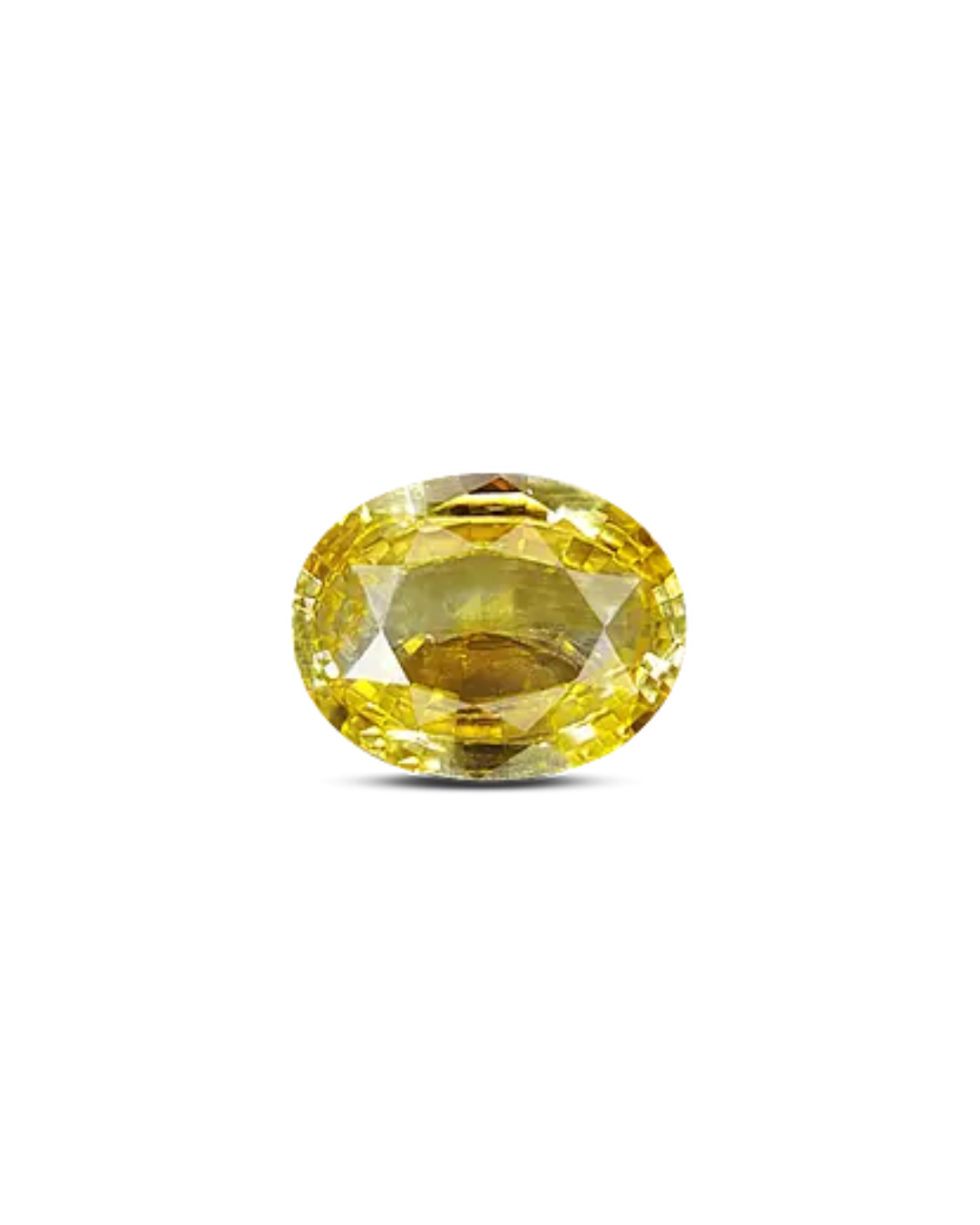
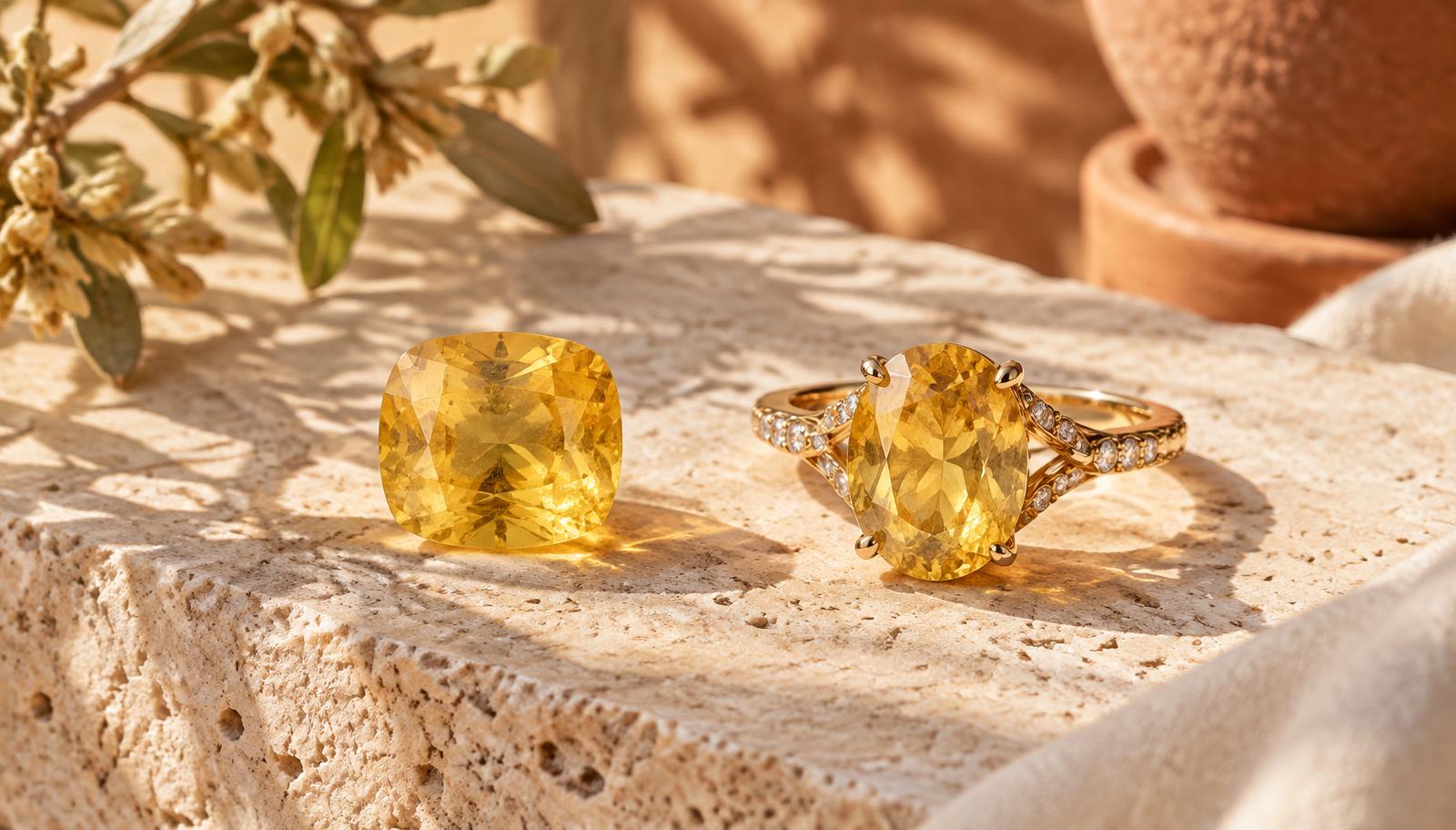
A fine Yellow Sapphire should look lively before it looks large. Colour is the most important quality factor: seek an even lemon, canary or golden yellow that remains attractive in daylight and warm indoor light. Brown or green modifiers can make a stone appear dull, while uneven colour zoning may become more obvious after setting.
Compare stones in neutral light. A well-cut sapphire should return light across most of its face rather than showing a pale see-through “window” in the centre or broad dark areas. The GIA sapphire buying guide explains how colour, cut and lighting work together.
Clarity and natural character
Natural sapphires commonly contain internal features. A small inclusion is not automatically a defect—and may help an expert establish natural origin—but fractures that reach the surface deserve closer attention because they can affect durability. Judge clarity alongside colour and brilliance rather than chasing a perfectly clean appearance at any cost.
- View the stone face-up and from the side under magnification.
- Check for chips around the girdle and fractures beneath prongs.
- Ask whether inclusions are visible without magnification.
- Compare the stone’s beauty at a normal viewing distance.
Treatments must be disclosed
Heat treatment is widely used to improve sapphire colour and clarity. Other processes, including lattice diffusion, can place colour near the surface and have a very different effect on value. Some yellow sapphires can also show unstable colour. GIA’s research on yellow sapphire chromophores and unstable colour shows why laboratory testing matters.
“Natural” describes geological origin; it does not by itself mean untreated. Always ask what treatment has been detected.
Read the certificate, not only the sales label
An independent laboratory report should identify the material as natural corundum and state detectable treatments. Match the report number and measurements to the stone, then verify the report through the issuing laboratory. Origin claims require specialist testing and should never be inferred from colour alone.
Pukhraj in Vedic tradition
In Jyotish tradition, Yellow Sapphire is associated with Jupiter (Guru). This is a cultural and spiritual practice rather than a scientifically established effect. A chart-specific recommendation should consider the whole Kundli, and no gemstone should be presented as a guarantee of health, wealth or a particular life outcome.
A thoughtful buying sequence: choose beauty and durability first, confirm treatment and identity through a report, then consider traditional wearing guidance if it is meaningful to you.